It’s the world’s second most consumed material after water, and chances are, you’ve never really thought about it.
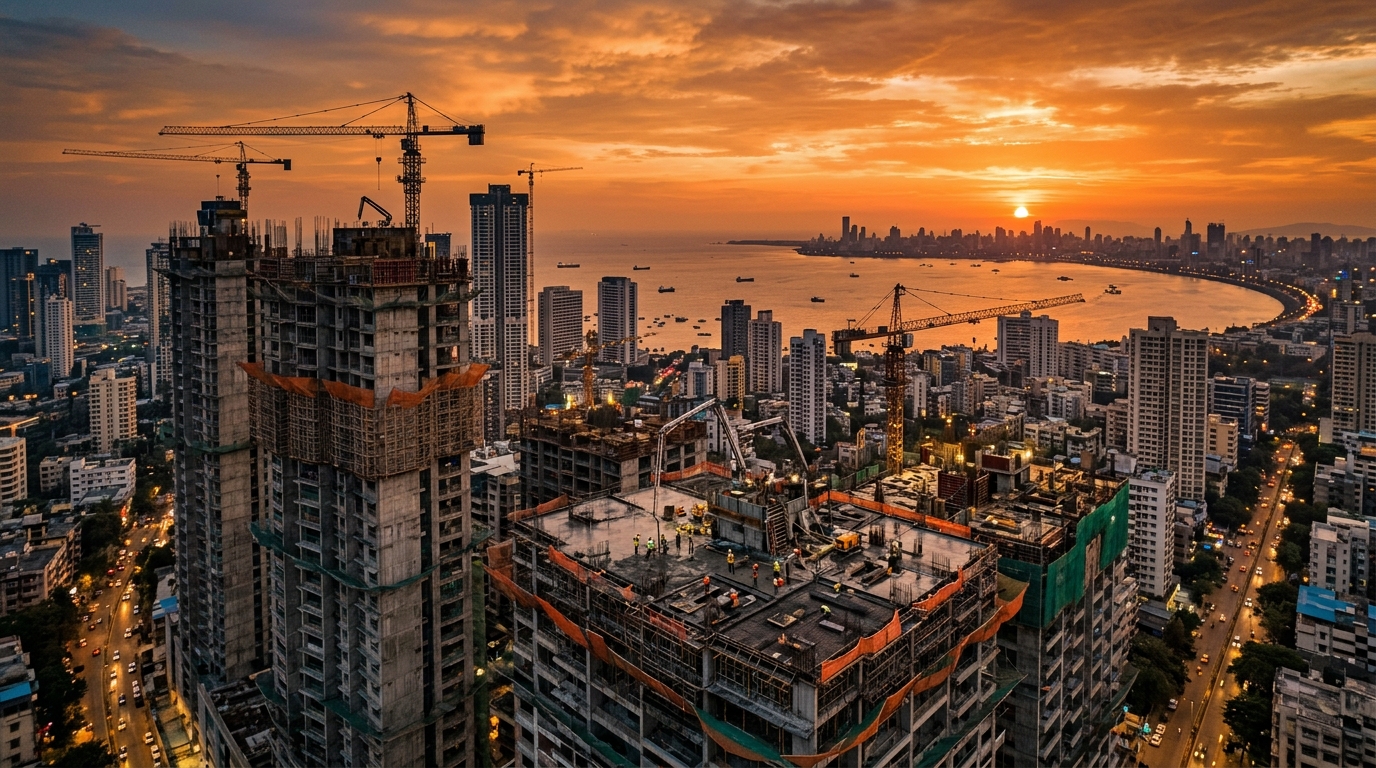
Concrete. Grey, heavy, unassuming. For most people it blends into the background. But look closer at the Bandra-Worli Sea Link, the Mumbai Trans Harbour Link, or the soaring tower of World One in Lower Parel and you’ll find something far more sophisticated than the concrete of your grandfather’s era.
India is in the middle of a quiet materials revolution. And the engineers who understand it are building structures that will outlast everything around them.
Why the Old Formula No Longer Cuts It
India’s infrastructure ambitions are staggering metro lines, greenfield expressways, seaports, smart cities, high-rise housing in land-scarce metros. Every single one of these projects demands concrete that doesn’t just hold weight, but resists chloride attack, manages thermal stress, stays workable in punishing conditions, and delivers a service life of 100 years or more.
Ordinary concrete simply wasn’t designed for this. Enter a new generation of special concretes engineered for performance, durability, and even aesthetics now being produced and supplied by leading Ready Mix Concrete (RMC) companies across India.
Meet the New Generation
High Performance Concrete (HPC): The Workhorse of Modern Infrastructure
High Performance Concrete isn’t just ‘stronger’ concrete. According to the American Concrete Institute, it meets special performance requirements impossible to achieve with conventional mixes high workability, high durability, early strength gain, very low permeability, and lower creep under load.
The ingredients are carefully chosen: fine ground Portland cement, pozzolanic materials like flyash, silica fume, ultrafine GGBS, ultrafine flyash, GGBS, combined with PCE-based hyperplasticisers and a water-binder ratio as low as 0.25.
HPC attributes at a glance:
• High strength and high durability
• Long retention time with early strength gain
• Very high workability with lower permeability
• Lower creep and shrinkage under loads and changing temperatures
In practice: The Bandra-Worli Sea Link used HPC with a characteristic strength of 60 MPa and target mean strength of 74 MPa, with durability parameters including RTPC and water penetration tests built into the specification. The Mumbai Trans Harbour Link (MTHL), stretching 21.8 km across Mumbai Bay, demanded similar performance with GGBS and ultra-fine additives baked into every pour.
|
Globally, the Burj Khalifa was built using HPC with compressive strength up to 80 MPa. Seattle’s Two Union Square used 131 MPa in its composite columns. India is now building in the same league. |
Lightweight Concrete: When Less Is Literally More
Here’s a question most people don’t ask: what if the concrete itself could weigh a fraction of what it normally does?
Low Density or Lightweight Concrete (LWC) replaces conventional aggregates with lightweight alternatives: volcanic pumice, thermally treated clay (Leca), fly ash-based Lytag, or processed slag. The result is concrete with dry density from 300 kg/m³ to 1800 kg/m³, compared to the standard ~2400 kg/m³.
Why does this matter? Because dead load is money. Reducing the weight of structural slabs means smaller foundations, less reinforcement, thinner members and in retrofit situations, it means you can add floors without redesigning the base structure.
Benefits of lightweight aggregate concrete:
• Reduction in dead loads savings in foundations and reinforcement
• Improved thermal properties and fire resistance
• Savings in transporting and handling precast units on site
• Reduction in formwork and propping
Real-world examples: Denver’s Civic Centre added 12 floors to an existing building using LWC, increasing office space by 65%. Chennai International Airport’s arrival area used 270 cubic metres of foamed concrete to fill sunken slab sections.
High Volume Flyash Concrete (HVFC): The Green Concrete India Is Sitting On
India produces enormous quantities of fly ash, a by-product of coal combustion. For decades it was a waste problem. Now, it’s a structural material.
High Volume Flyash Concrete replaces 50–60% of Ordinary Portland Cement with high-quality processed fly ash. The result: lower heat of hydration (critical for mass concrete pours), reduced thermal cracking, improved long-term compressive strength, and a dramatically lower carbon footprint.
Key HVFC attributes:
• Increases slump and delays setting time
• Improves long-term compressive, flexural, and split tensile strengths
• Requires longer curing times but delivers extraordinary durability
|
Researchers demonstrated a HVFA foundation designed to last 1,000 years a massive monolithic structure that, when inspected five years after construction, showed zero surface cracking and nearly double the specified design strength. |
In India, HVFC is extensively used for raft foundations in high-rise construction particularly to control thermal and shrinkage cracking in mass concrete applications in hot climates.
Self-Compacting Concrete (SCC): The Pour That Places Itself
Imagine concrete that flows into every corner of a complex form, wraps around dense reinforcement bars, and consolidates perfectly without a single vibrator touch. That’s Self-Compacting Concrete.
Originally developed in Japan in the 1980s, SCC achieves its magic through a modified mix: more fine material (fly ash, GGBS, limestone filler) without increasing water content, fundamentally changing the concrete’s rheological behaviour. Low yield stress gives it exceptional flowability; low water content gives it high viscosity, keeping coarse aggregate suspended without segregation.
The practical upside is significant faster pours, reduced labour, better finish quality, and the ability to cast complex architectural shapes that would otherwise be nearly impossible. IT parks in Pune and Hyderabad, residential towers in Bangalore and Mangalore have all leveraged SCC with aluminium and Mivan formwork systems.
Fibre Reinforced Concrete (FRC): Tough Where It Counts
Concrete is famously strong in compression and weak in tension, a fundamental limitation that fibres address directly. Fibre Reinforced Concrete disperses short discrete fibres uniformly through the mix. When a crack initiates, the fibres bridge it, absorbing energy and preventing sudden brittle failure.
Different fibres, different purposes:
• Steel fibres: boost load-carrying capacity; ideal for industrial floors, ground slabs over piles, and marine armour blocks
• Glass fibres: enable intricate precast architectural panels and facade cladding
• Polypropylene fibres: control plastic shrinkage cracking and improve fire resistance
Fibres are commonly specified for:
• PQC concrete roads and airport taxiways/aprons
• Water retaining structures and deck slabs
• Industrial floors, warehouses, and railway platforms
• Tunnelling applications with shotcrete
Coloured & Decorative Concretes: Concrete Gets an Aesthetic Makeover
Who said infrastructure has to be grey?
Stamped and coloured concretes are reshaping how architects and landscape designers think about public and private spaces. Using specialised pigments, surface retarders, and textured stamping mats, concrete can convincingly replicate granite, marble, slate, or natural stone pavers at a fraction of the cost.
In India, reputed RMC manufacturers have made these products commercially available in a wide range of colours and textures, opening up applications in driveways, footpaths, plazas, landscaping, and architectural facades.
The Bigger Picture: Why This Matters Right Now
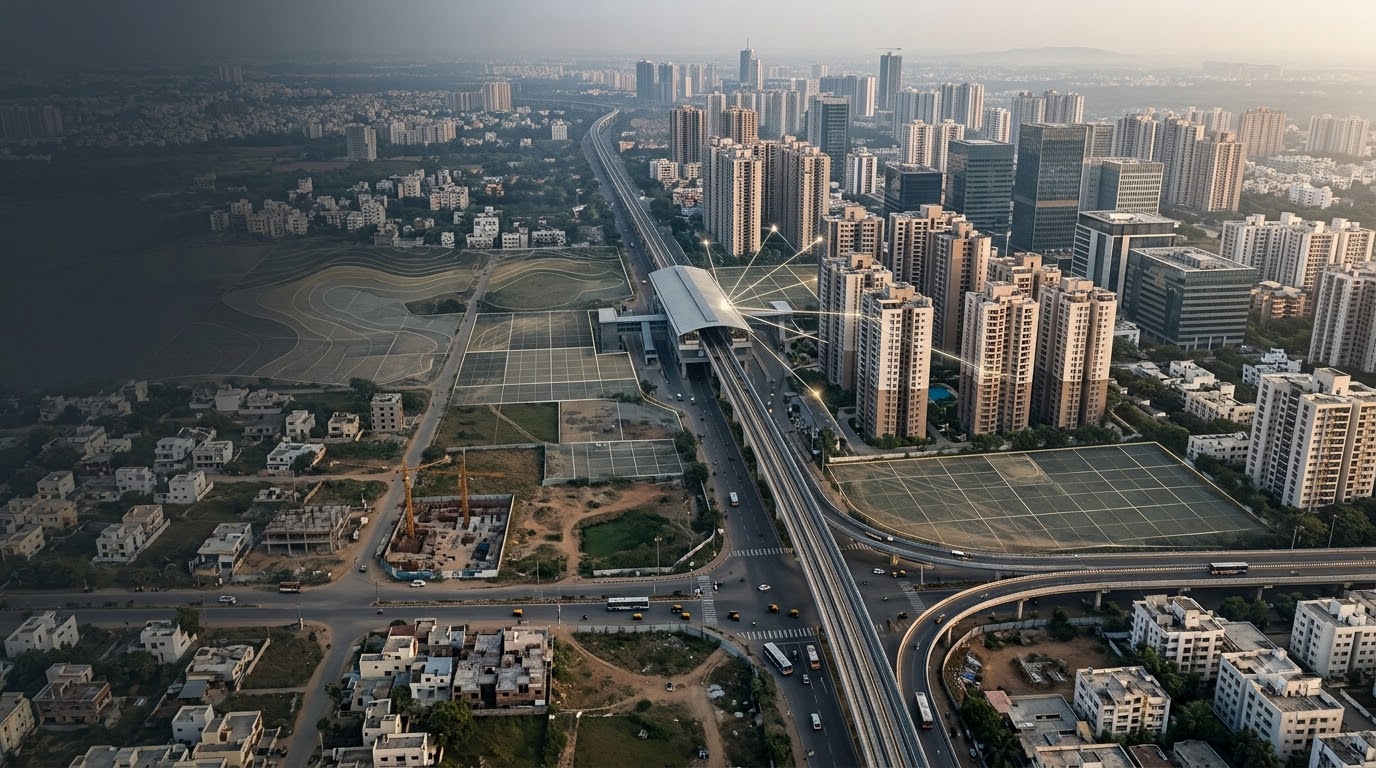
India’s infrastructure buildout over the next decade is unlike anything in the country’s history. Metro corridors, expressways, coastal and marine structures, high-rise residential clusters in space-constrained cities, and modernised railway infrastructure all of it requires materials that perform over century-long timescales in demanding environments.
Using alternative cementitious materials flyash, ultrafine flyash, GGBS, ultrafine GGBS, silica fume doesn’t just improve performance. It reduces Portland cement consumption, cuts carbon emissions, and moves India closer to its net-zero targets. The economics work too: higher upfront costs are easily offset by lower lifecycle costs for structures designed to last 100+ years.
The Takeaway
Concrete’s reputation as a dull, inert grey slab is genuinely outdated. The material being poured into India’s bridges, foundations, coastlines, and towers today is a precisely engineered, high-performance product designed to resist the environment, carry extraordinary loads, and serve for generations.
The buildings going up in Mumbai, Bangalore, Chennai, and NCR aren’t just taller. They’re smarter, at the material level.
That’s the real story of India’s construction boom and it starts with what’s inside the mix.