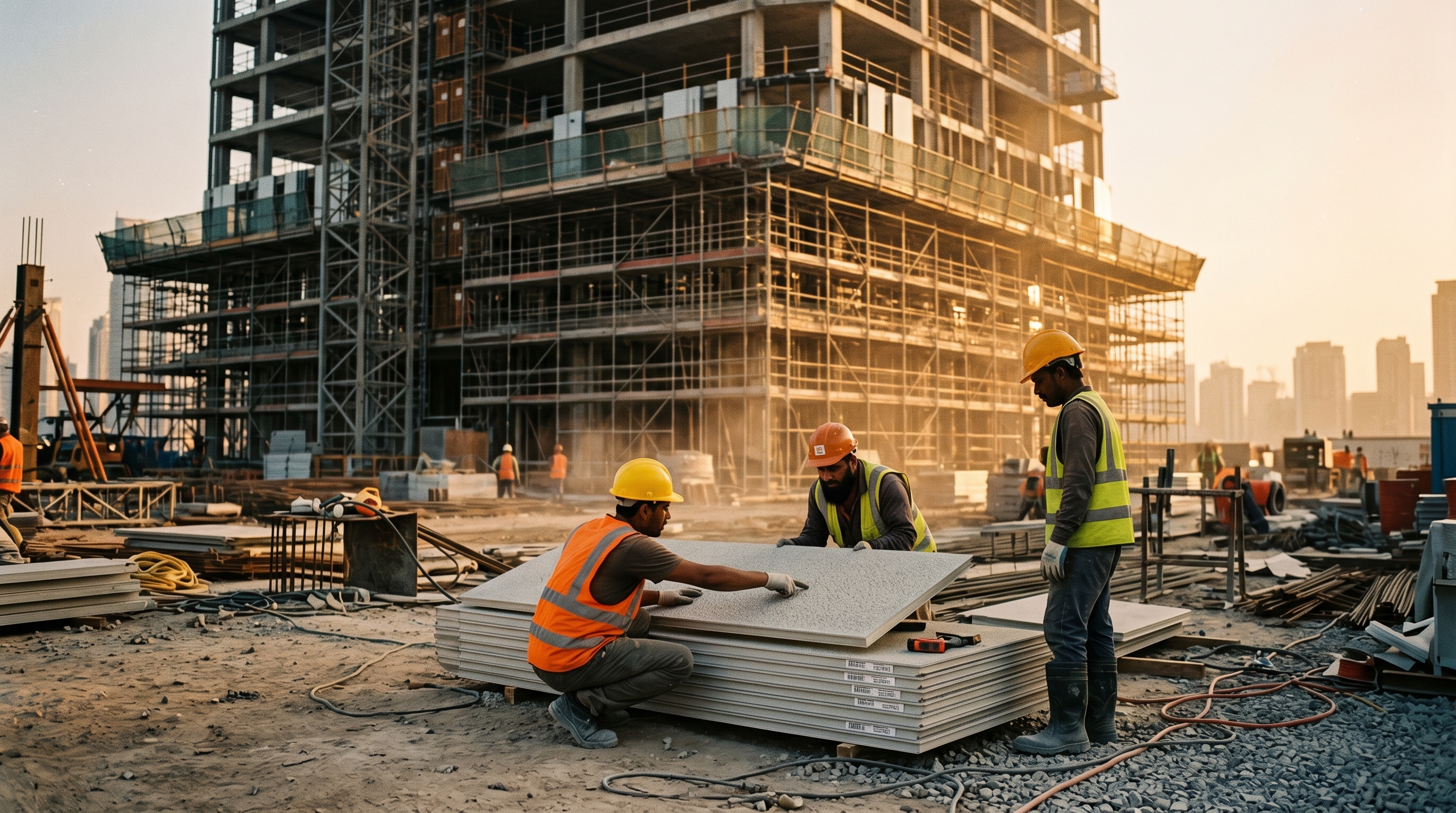
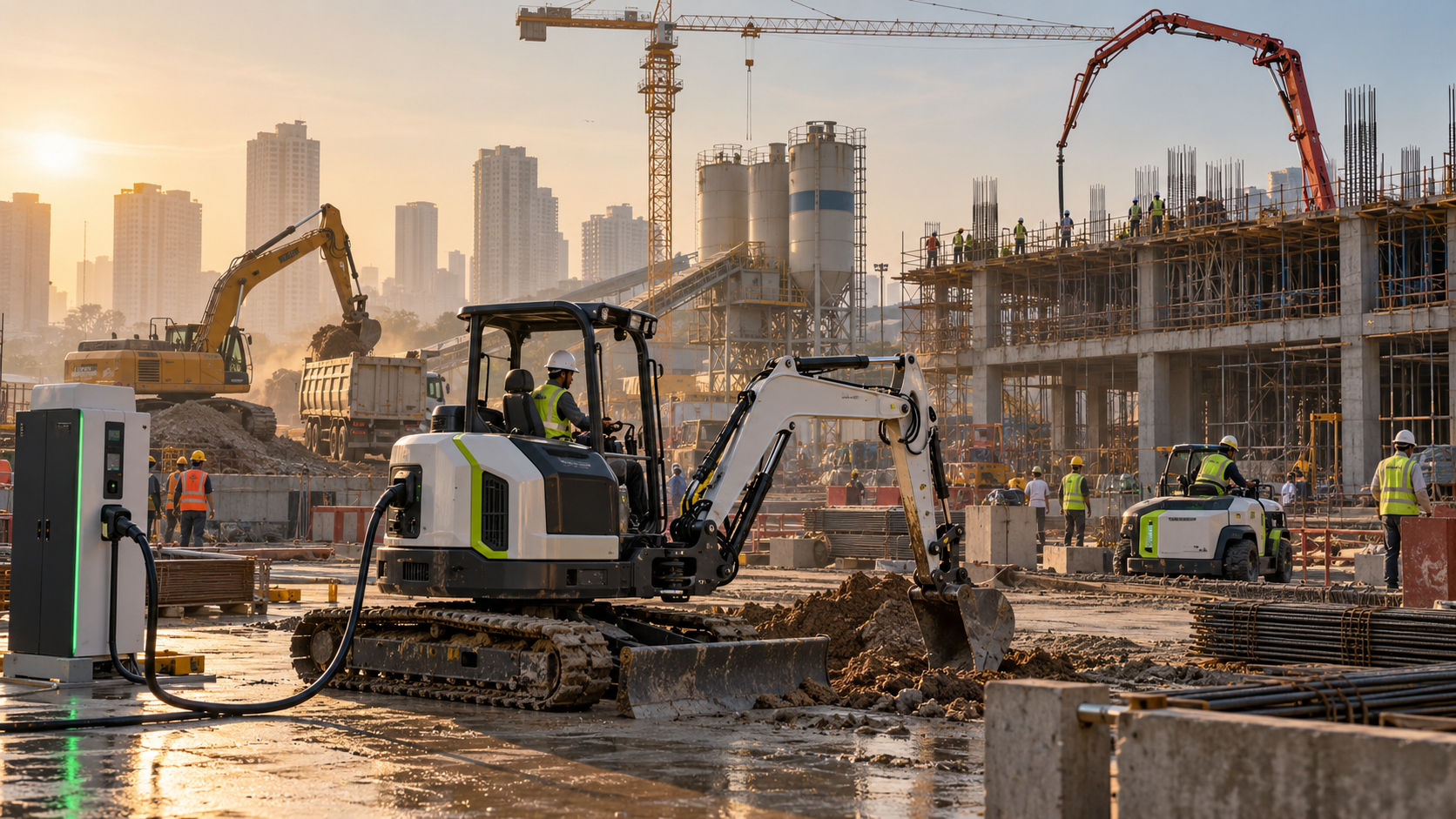
It sounds radical but that’s exactly where construction technology is heading.

India is the world’s second-largest producer of both cement and steel, and nearly 62% of all steel produced goes straight into construction. Cement production alone hit 502 million tonnes in 2018, racing toward 600 MT by 2025. All of this is powered largely by coal a resource the planet simply cannot keep burning at this pace.

Here’s the uncomfortable truth: India’s construction industry is far from meeting any meaningful sustainability benchmark. Fast-track builds, rampant material waste, quality control failures, minimal recycling, and heavy dependence on manual labour are pushing the system to its limits.

Something has to change.


Enter Polymer Composites, The Alternative Nobody’s Talking About Enough

Meet C-PC (Chetana-Polymer Composites) a fly ash-based building system that ditches cement and steel entirely, yet is engineered to perform like them.

C-PC is built on a combination of micro-materials held together by a high-performance polymer matrix. What makes it genuinely exciting? The production process is simple, low-energy, and designed for recyclability right at the source, a stark contrast to the resource-guzzling world of conventional construction.


Three Grades, One Big Idea

C-PC isn’t a one-size-fits-all product. It’s engineered across three performance grades to suit a wide range of structural demands:


Grade

Strength Range

Grade 1

20 – 50 MPa

Grade 2

100 – 200 MPa

Grade 3

250 – 400 MPa


Whether you need lightweight partition walls or load-bearing structural members, there’s a C-PC grade designed for it.


Why Should Builders Actually Care?

Here’s where it gets interesting. Compared to conventional steel/GI systems, C-PC brings some compelling advantages:


        100% rust-proof, no corrosion, no maintenance headaches

        Significantly lighter, easier to handle, transport, and install

        Completely recyclable with minimal energy expenditure

        Factory-made, consistent quality without heavy reliance on skilled site labour

        Carpenter-friendly, easy to cut, shape, and customise on-site

        3D printing compatible, automation-ready for the construction sites of tomorrow


Where Can C-PC Actually Be Used?

The application range is broader than most people expect:


        Non-structural elements: doors, window frames, shutters

        Wall systems: internal partitions and external walls (50mm to 200mm sections)

        Structural components: slabs, beams, columns, and decking

        Finishing systems: decorative panels, floor screed, protective cladding

        Infrastructure: kerb stones, traffic dividers, compound walls, fencing

        Roofing & decking sheets, purlins, trusses, and light portals

        Electrical fittings: transmission and insulation accessories


Does It Actually Perform? The Lab Says Yes.

Independent testing carried out at CIPET, Mysuru confirmed that fly ash-based C-PC composites deliver solid results across multiple mechanical stress parameters, flexural strength, compressive strength, tensile strength, and impact resistance all passed evaluation.

This isn’t just theoretical promise. The data backs it up.


The Bigger Picture

Every tonne of cement avoided is a step away from coal dependency. Every steel beam replaced is a reduction in carbon heavy industrial output.

Polymer composite technology isn’t asking the construction industry to abandon everything it knows, it’s asking it to evolve intelligently. The materials exist. The test data exists. What’s needed now is for civil engineers and material scientists to champion adoption at scale.

The construction industry of the future will be built differently. The question isn’t if it’s how soon.

About the author:   Er. G. H. Basavaraj,

                                 Managing Director, Chetana Engineering Services,

                                 Bangalore.


Interested in sustainable construction innovations? Stay tuned to BUILDONOMICS for more deep-dives into the technologies reshaping how India builds.