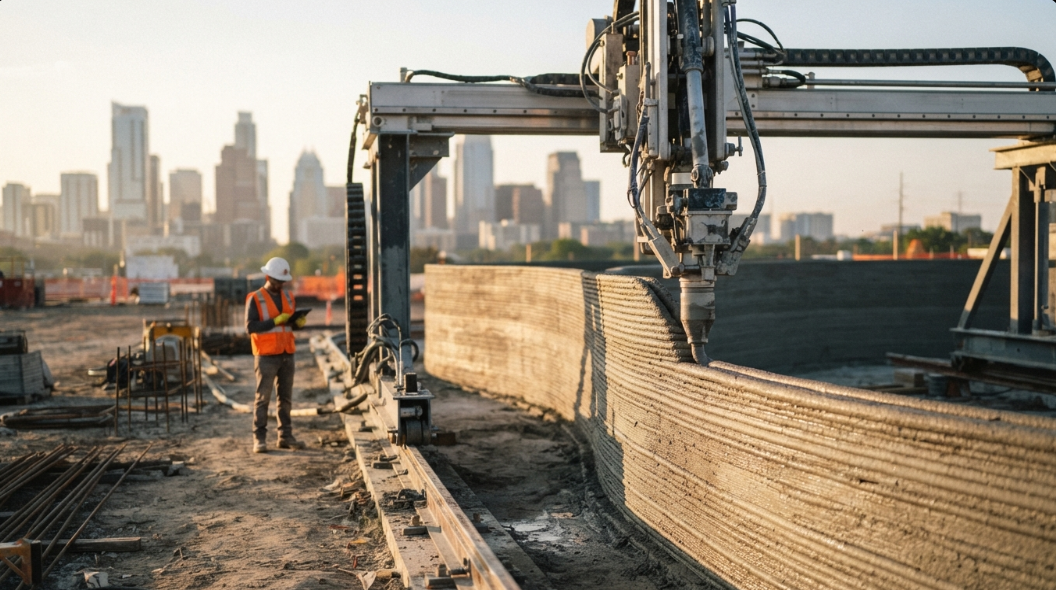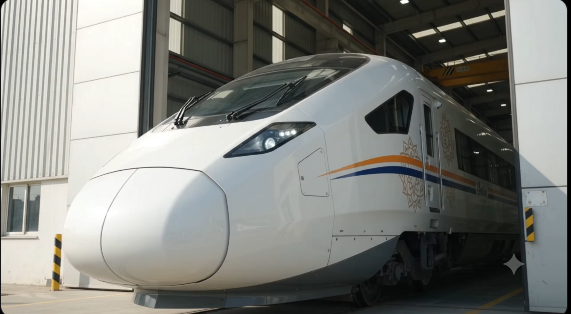
280 kmph. Indigenous design. But the train is only half the story. The bigger engineering story is what the train runs on. At 280 kmph, the concrete and civil infrastructure face demands far beyond conventional rail.
→ Ballastless track: Loads transfer directly into the concrete slab, leaving little room for construction or material variability.
→ Millimetre-level geometry: Viaducts and track systems must maintain precise alignment despite creep, shrinkage, thermal cycles and settlement.
→ Long-term durability: Coastal exposure demands low permeability and tightly controlled concrete performance over a design life of decades.
→ Prestressed concrete: Predicting creep and shrinkage isn't just about structural performance. Long-term deformation can affect track geometry and operating speeds.
This is where concrete stops being just a construction material and becomes a precision engineering system. And alongside the civil infrastructure, India's manufacturing capability is advancing too, with BEML developing indigenous high-speed trainsets designed for speeds up to 280 kmph.
The train is a manufacturing achievement. The track is a materials and engineering challenge. Together, they represent a significant step in India's high-speed infrastructure journey.
Which is the bigger challenge for India's high-speed rail: precision, durability, or long-term deformation control?
hashtagBuildonomics hashtagBulletTrain hashtagHighSpeedRail hashtagMumbaiAhmedabad hashtagIndiaInfrastructure hashtagConcreteTechnology hashtagInfrastructureEngineering hashtagMadeInIndia hashtagConcreteEngineering hashtagIndianRailways
- Buildonomics Staff